
LMM BLOG
Megatrend Demographics – Structural Change with Capital Market Relevance
Few megatrends are as profound and steady as demographic development. While technological or geopolitical trends often follow cyclical patterns, demographics represent a predictable, long-term driver of economic structures. For capital markets, this means: population growth, aging, and migration are not mere statistics – they determine which industries will grow, which will shrink, and how capital should be allocated.
1. Global Trends: Aging, Urbanization, and Imbalance
Although the global population continues to grow, the pace has significantly slowed. According to UN projections, global population growth will stagnate by 2050, while the age structure will undergo a dramatic shift: In developed economies like Germany, Japan, or Italy, up to 35 % of the population will be over 60 years old. At the same time, the youth population is growing in emerging markets, particularly in India, Africa, and Southeast Asia.
This divergence leads to an economic imbalance: While mature economies face rising social spending, labor shortages, and productivity pressures, younger nations benefit from a so-called demographic dividend – a high share of working-age population, unlocking growth potential. Capital flows are likely to shift towards these growth markets in the long term, especially in sectors like infrastructure, education, consumer goods, and financial services.
Urbanization amplifies this trend: Over 55 % of people already live in cities, and this share is rising. This change alters consumption patterns, increases demand for real estate, and drives investments in smart city solutions, logistics, and energy efficiency.
2. Capital Markets in the Age of Demographic Change
Demographic change influences interest rates, savings rates, and capital flows. According to statistics (see chart), life expectancy is increasing, which tends to make aging societies more inclined to save and less willing to take risks. This has contributed to structurally low real interest rates in recent years. At the same time, pension systems and insurers face mounting pressure to generate stable returns in a low-growth environment. For capital markets, this means that bond markets will continue to be supported by sustained high demand for safe assets. In equity markets, experts predict that dividend-rich and defensive sectors may benefit, such as stocks from the healthcare, caregiving, and basic consumer goods sectors.
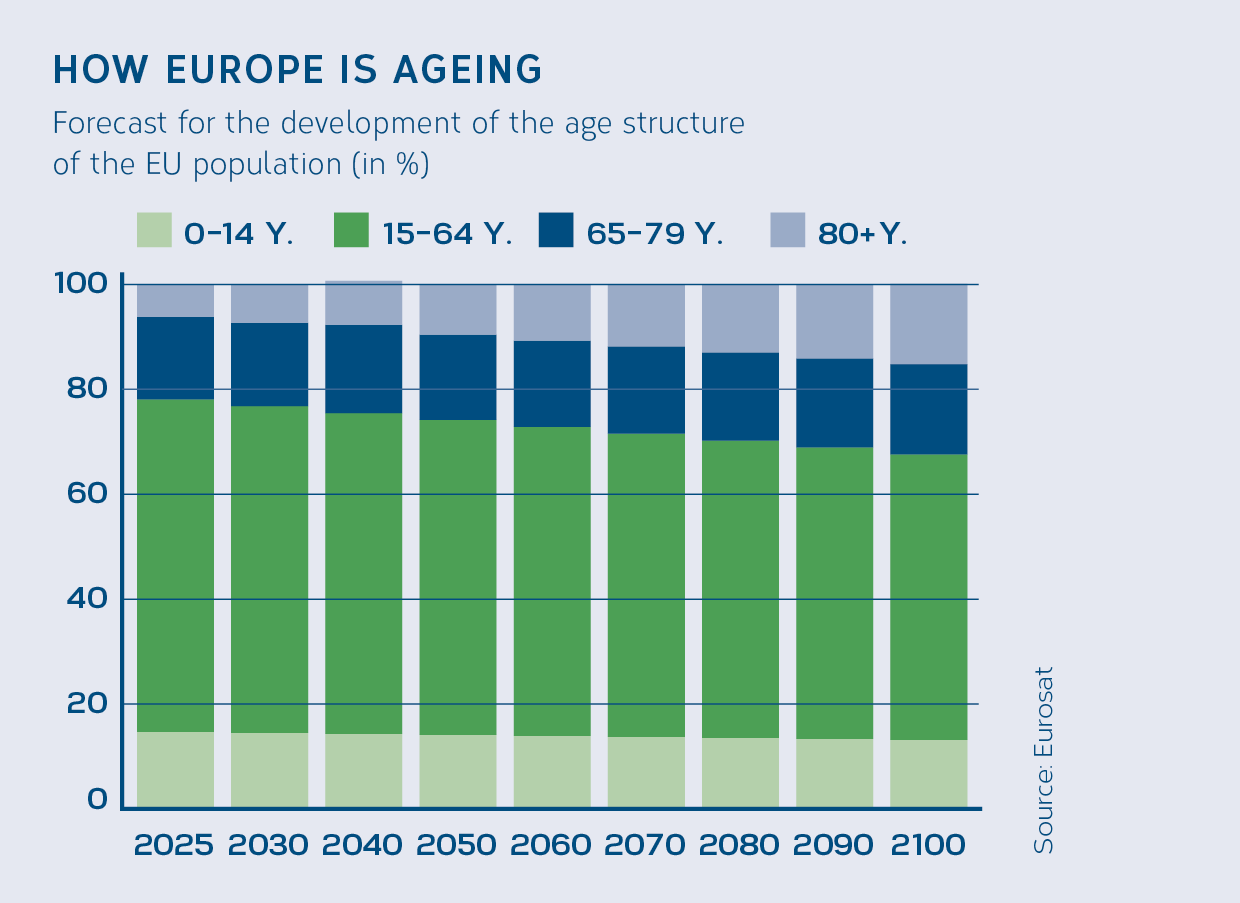
Another phenomenon is capital consumption. Aging households tend to liquidate accumulated savings during retirement to finance consumption. This process could lead to asset sales in the medium to long term. In contrast, emerging markets may benefit from capital inflows, as the return outlook and demographic dynamics remain more attractive.
3. Sectoral Winners and Structural Losers
From an investment perspective, the demographic megatrend targets specific industries. Winning sectors are characterized by structural demand that is independent of economic cycles:
Healthcare:
Aging populations drive increasing demand for pharmaceuticals, medical technology, nursing homes, and healthcare services. Companies focused on treating chronic diseases, diagnostics, and digital health solutions will particularly benefit.
Insurance and Pension Products:
Financial planning, life insurers, pension funds, and asset managers offering innovative retirement solutions are becoming more significant.
Consumer Goods and Leisure:
Seniors represent a wealthy target group focused on quality of life, travel, health, and, in some cases, luxury goods.
Automation and Robotics:
The labor shortage in aging economies is driving investments in productivity enhancements, robotics, and artificial intelligence.
4. Investment Strategies in the Context of the Megatrend
The demographic megatrend requires both institutional and private investors to adjust their evaluation methods. Instead of focusing solely on short-term market movements, long-term structural factors must also be considered in the decision-making process. A demographic-based investment strategy involves not only geographic diversification by investing in emerging, young economies but also focusing on sectors expected to experience stable demand due to long-term demographic changes. Fund providers and asset managers are already responding: «Silver Economy» funds, demographically
diversified ETFs, and healthcare-themed strategies are gaining in importance. Additionally, impact investments in education, healthcare, or retirement provision provide an opportunity to combine returns with social benefits.
Conclusion: Demographics as a Compass for Long-Term Capital Allocation
The demographic megatrend is not a short-term cycle, but a global structural shift that will sustainably shape markets, industries, and asset classes. Shifts in population dynamics could determine interest rates, productivity patterns, and capital flows for decades. For investors, it is crucial to view this trend not as a risk, but as a strategic opportunity.
Those who understand demographic patterns and incorporate them into their allocation can capitalize on investment opportunities, such as focusing on sectors that will benefit from increased investments due to population aging.
The statement that demographics is «perhaps the most predictable variable of the future» highlights the fact that demographic developments are relatively easy to predict (in contrast to factors like technology or political developments). Investors can incorporate these trends into their long-term planning, as demographic change is difficult to alter in the short term and thus provides a reliable foundation for decisions.
LMM COMPASS
With our newsletter we provide information about the current situation on the financial markets, current investment topics and LMM.